Learning to drive gives teenagers more independence, but it also introduces new responsibilities. Parents may worry about speeding, distracted driving, late-night trips, and how their teenagers will respond to unfamiliar road conditions. Today, some families are turning to teen driver safety apps, vehicle monitoring features, and speed alerts to support safer driving habits.
These tools can provide information about driving behavior, including speed, trip history, sudden braking, and phone distraction. Some send notifications when a driver exceeds a selected speed threshold or travels outside an agreed area. Others generate reports that parents and teenagers can review together.
However, technology alone cannot teach judgment, patience, or hazard awareness. A driving app may identify certain behaviors, but it cannot explain every situation that occurs on the road. Parents still need to provide guidance, demonstrate responsible driving, and help teenagers understand why safety rules matter.
This guide explains how teen driver safety apps work, which features may be useful, and how families can combine technology with practical driving education.
Why Teen Drivers Need Extra Safety Guidance
New drivers are still developing the ability to recognize hazards, judge distances, manage distractions, and make decisions under pressure. Situations that seem routine to experienced motorists can become challenging for someone who has only recently received a license.
According to the National Highway Traffic Safety Administration, inexperience, speeding, distractions, nighttime driving, and passengers are important concerns for teen driver safety.
Parents can help by establishing expectations before teenagers begin driving independently. These expectations might include obeying speed limits, avoiding phone use, following passenger restrictions, wearing seat belts, and communicating changes to travel plans.
The First Months of Independent Driving
The transition from supervised practice to independent driving deserves particular attention. A teenager who performs well with a parent in the passenger seat may behave differently when driving alone or with friends.
Without an experienced adult nearby, the teenager must make every decision independently. Technology may provide additional feedback during this learning period, but it should complement rather than replace supervised practice.
 How Teen Driver Safety Apps Work
Teen driver safety apps collect information through smartphone sensors, GPS, connected vehicles, or dedicated monitoring devices. Depending on the product, they may record trip distances, driving speeds, acceleration patterns, braking events, and general travel routes.
Some systems provide feedback directly to the teenager. Others share selected information with parents through a connected account. Certain vehicles also offer built-in teen driving settings that can restrict or monitor specific functions.
Speed Monitoring and Alerts
Speed monitoring is among the most recognizable features. Parents may be able to establish a speed threshold and receive a notification when the vehicle exceeds it.
These alerts can create opportunities to discuss speeding, but they require careful interpretation. A reported speed may not always reflect the posted limit for a particular road. GPS measurements can also contain errors, and a brief event may not tell the complete story.
Parents should therefore use alerts as conversation starters rather than automatic proof of reckless driving.
Trip History and Location Features
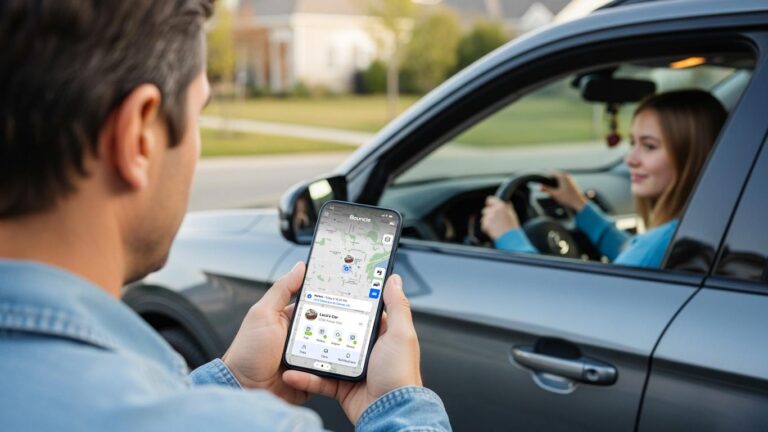
Some apps display completed trips, departure times, arrival times, and approximate routes. These features may help families confirm that a teenager arrived safely or followed an agreed travel plan.
Location monitoring should be discussed openly. Teenagers should understand what information is collected, who can access it, and why the family is using the feature.
Hard Braking and Rapid Acceleration
Driving reports may identify sudden braking or rapid acceleration. Repeated events could suggest that a driver needs additional practice maintaining following distance or anticipating traffic changes.
However, a single hard-braking event may represent a proper response to an unexpected hazard. Parents should avoid assuming that every alert indicates unsafe behavior.
What Driving Scores Really Mean
Some apps combine different measurements into a numerical driving score. Although these scores may help identify patterns, they are not standardized across every provider.
A high score does not guarantee safe driving, and a low score does not automatically establish that a teenager drove irresponsibly. Scores are best understood as feedback generated by a particular system.
What Research Says About Driving Feedback
Research has examined whether electronic feedback can improve teen driving behavior. A 2026 randomized clinical trial published in JAMA Network Open studied in-vehicle feedback and parent communication training among teenage drivers.
The study found reductions in speeding among teenagers receiving driving feedback. The group receiving feedback together with parent communication training showed a larger reduction in the proportion of miles involving speeding than the control group.
These findings suggest that technology can support behavior change, particularly when combined with constructive parental involvement. However, reduced speeding in a study does not mean every monitoring app has been proven to prevent crashes.
NHTSA also discusses electronic technology for parental monitoring as one strategy for observing and addressing teen driving behavior.
Why Parent Conversations Matter More Than Alerts
Technology may identify an event, but communication helps teenagers understand its meaning. A notification that a driver exceeded a speed threshold is more useful when it leads to a discussion about speed management, road conditions, and safer choices.
Parents should avoid treating every notification as an opportunity for punishment. If teenagers expect an argument whenever the app records an unusual event, they may become defensive or stop participating honestly in safety discussions.
Ask Questions Before Drawing Conclusions
Suppose an app reports several hard-braking events during a school commute. Instead of immediately assuming the teenager was following too closely, a parent could ask what happened during the trip.
Heavy traffic, a sudden lane change, or a pedestrian crossing unexpectedly might explain the event. The conversation can then focus on maintaining space, scanning intersections, and anticipating hazards.
Recognize Safe Decisions
Positive feedback also matters. Parents can acknowledge consistent seat belt use, responsible trip planning, respect for nighttime restrictions, and a willingness to ask for help when conditions become difficult.
Recognizing improvement may encourage teenagers to view monitoring as part of learning rather than constant surveillance.
Which Safety App Features Are Worth Considering?
Families should select features based on the teenager’s experience, driving environment, and specific needs. A new driver who frequently travels on highways may benefit from different feedback than someone who primarily drives short distances around town.
Useful Features to Compare
- Speed alerts: Notifications when a selected speed threshold is exceeded.
- Trip summaries: Information about completed drives and travel patterns.
- Phone distraction detection: Feedback about certain phone interactions during trips.
- Driving behavior reports: Records of braking, acceleration, or other measured events.
- Arrival notifications: Optional alerts when the teenager reaches an agreed destination.
- Vehicle-based restrictions: Available controls for certain speed, audio, or other settings.
Not every product offers these functions, and the accuracy of individual measurements can vary. Parents should review current features, subscription requirements, privacy policies, and device compatibility before choosing a service.
How Phone Settings Can Reduce Distraction
A smartphone can support driving safety, but it can also create distractions. Messages, notifications, music controls, and navigation changes may pull attention away from the road.
Teenagers should configure appropriate driving-focus or do-not-disturb settings before beginning a trip. These settings can silence nonessential notifications and reduce the temptation to check incoming messages.
NHTSA’s guidance for parents of teen drivers recommends eliminating phone distractions and setting clear rules for responsible driving.
Set Navigation Before Leaving
Drivers should review directions and enter destinations while parked. If the route changes unexpectedly, the safest option is to stop at an appropriate location before making complicated adjustments.
Voice commands may reduce certain manual interactions, but they can still create cognitive distractions. Teenagers should not assume that a feature is automatically safe simply because it does not require touching the phone.
Privacy and Trust When Monitoring Teen Drivers
Location tracking and driving reports raise legitimate privacy questions. Teenagers may feel uncomfortable if every trip is monitored without explanation or if their driving information is shared more broadly than expected.
Parents should discuss the purpose of monitoring before activating it. Explain which behaviors the family wants to improve and how the information will be used.
 Agree on Reasonable Boundaries
Families can decide together when monitoring will occur, who can review reports, and whether the settings should change as the teenager gains experience.
It is also sensible to examine the app’s data retention practices, location permissions, account security, and options for deleting information.
A transparent approach can help teenagers understand that the goal is safer driving, not unnecessary intrusion into their personal lives.
How to Build a Safer Teen Driving Plan
A driving app works best as one part of a broader safety plan. Parents should establish rules, provide regular practice opportunities, and adjust responsibilities gradually as their teenagers demonstrate stronger skills.
Create a Written Driving Agreement
A family driving agreement can outline expectations for speed, passengers, phone use, seat belts, nighttime travel, and communication.
Rules should also reflect the applicable graduated driver licensing requirements. These laws vary by state and may restrict nighttime driving, passengers, or electronic device use for younger drivers.
Parents can consult NHTSA’s teen driving resources for guidance about graduated licensing and family safety expectations.
Practice Different Driving Conditions
Teenagers need experience with more than familiar neighborhood streets. Supervised practice may include intersections, highway merging, parking, rural roads, and appropriate exposure to changing weather conditions.
Parents should choose practice situations that match the teenager’s current abilities and follow applicable learner-permit rules.
Review Driving Reports Together
Instead of checking every notification immediately, families may benefit from a regular review. Discuss patterns, improvements, and areas that require additional practice.
For more general driving strategies, see Top Car Accident Prevention Tips Every Driver Should Learn.
Why Vehicle Safety Technology Is Not Enough
Many newer vehicles include automatic emergency braking, lane-keeping assistance, blind spot warnings, and driver attention systems. These features may help in certain situations, but they have operating limitations.
Parents should explain that a car equipped with advanced safety technology is not a self-driving vehicle. Teenagers still need to check mirrors, maintain following distance, monitor traffic, and remain ready to respond.
Additional information is available in The Role of Technology in Preventing Car Accidents.
What Parents Should Do After a Teen Driving Incident
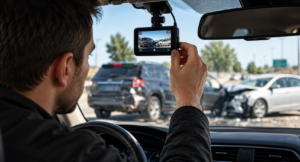
If a teenager experiences a collision or other serious driving incident, immediate safety comes first. The driver should seek medical assistance when necessary, contact emergency services when appropriate, and follow local reporting requirements.
Driving app records may provide useful context, but they should not replace photographs, witness information, police reports, or other documentation. If relevant trip data exists, preserve it according to the service’s available export or retention features.
Parents can also review Car Accident Basics: How Insurance Works After a Crash to understand general insurance considerations following a collision.
Final Thoughts
Teen driver safety apps and speed alerts can help families identify driving patterns, discuss risky behavior, and reinforce responsible habits. They may be especially useful during the first months of independent driving, when teenagers are still developing judgment and experience.
However, technology should support learning rather than replace it. The most useful approach combines clear expectations, supervised practice, constructive feedback, privacy awareness, and positive parental involvement.
Parents should also demonstrate the behaviors they expect from their teenagers. Wearing seat belts, avoiding phone distractions, following speed limits, and remaining patient in traffic set examples that no app can provide.
When families use driving technology thoughtfully, it can become a practical educational tool. The goal is not to monitor every movement indefinitely, but to help young drivers develop the skills and confidence to make safer decisions independently.