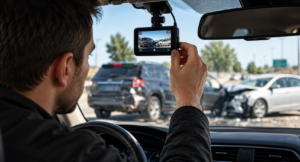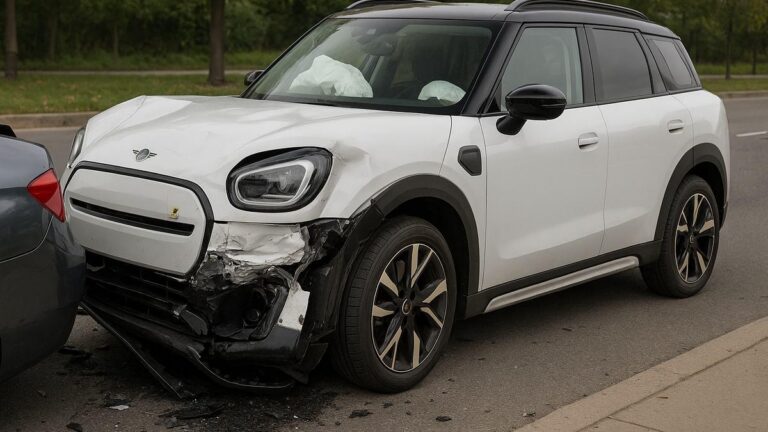
Electric vehicles are becoming a familiar sight on American roads. Drivers appreciate their quiet operation, modern technology, and reduced dependence on gasoline. However, when an electric vehicle is involved in a collision, its high-voltage battery system introduces safety considerations that differ from those of a conventional gasoline-powered car.
Understanding EV battery safety after a crash can help drivers recognize possible hazards, communicate with emergency responders, and avoid unsafe decisions. Although electric vehicles are designed with multiple protective systems, a severe impact may damage the battery enclosure, electrical connections, or other high-voltage components.
Not every electric vehicle collision causes battery damage or fire. Many crashes involve ordinary body damage without compromising the battery. Nevertheless, when damage is suspected, drivers should treat the situation cautiously and allow qualified professionals to assess the vehicle.
This guide explains what can happen to an EV battery after an accident, which warning signs deserve attention, and why towing, storage, and repair may require special precautions.
Why EV Batteries Need Special Attention After a Crash
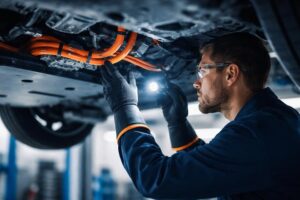 Most modern battery-electric vehicles use large rechargeable battery packs containing many individual cells. These packs store substantial electrical energy and are commonly installed beneath the passenger compartment, although their exact locations vary by vehicle design.
Manufacturers use protective structures, monitoring electronics, and safety systems to reduce the likelihood of battery damage. However, a sufficiently severe collision may deform the battery enclosure, damage internal cells, or expose electrical components.
The National Highway Traffic Safety Administration advises that damaged high-voltage batteries and electrical components should be treated as potentially energized.
High-Voltage Electrical Hazards
Electric vehicle battery systems operate at voltages significantly higher than ordinary automotive electrical systems. Damaged cables, connectors, or battery components may create an electric shock hazard.
Drivers should never touch exposed high-voltage wiring, attempt to disconnect damaged electrical components, or investigate a damaged battery enclosure themselves.
Battery Damage May Not Be Visible
An EV may appear to have only moderate exterior damage while important components underneath have experienced an impact. Conversely, visible body damage does not necessarily mean the high-voltage battery has been affected.
A professional assessment may be needed to determine whether the vehicle can be safely operated, transported, charged, or repaired.
What Happens Inside an EV Battery During a Severe Impact?
When a collision damages a battery cell, internal components may deform or develop an electrical short circuit. Under certain conditions, this can generate heat and trigger additional chemical reactions.
One serious possibility is thermal runaway, a process in which a battery cell generates heat faster than it can dissipate that heat. The reaction can potentially spread to nearby cells and produce flammable gases.
Understanding Thermal Runaway
Thermal runaway does not occur after every collision. It is a specific failure condition that can develop when cells experience serious damage, overheating, or certain internal faults.
According to the National Transportation Safety Board, damaged lithium-ion batteries can present challenges involving thermal runaway, remaining electrical energy, and the possibility of fire reignition.
Why Battery Fires Can Be Difficult to Manage
A battery fire may involve heat generation within the battery pack rather than only an external flame. This can complicate cooling, monitoring, and emergency response.
Firefighters receive specialized guidance about electric vehicle incidents because damaged batteries can remain hazardous after visible flames disappear.
These challenges do not establish that electric vehicles catch fire more frequently than gasoline vehicles. The National Fire Protection Association notes that available evidence does not establish that EVs are more likely to experience fires than conventional vehicles.
Warning Signs of a Damaged EV Battery
Some battery problems may produce noticeable warning signs. Others may not be immediately apparent, which is why a vehicle should not be considered safe solely because no smoke or flames are visible.
Possible Warning Signs
- Smoke or vapor emerging from beneath the vehicle
- Unusual hissing, popping, or crackling sounds
- Unexpected heat near the battery area
- Visible fluid leaks or damaged battery components
- Strong or unusual chemical odors
- Battery-related warnings appearing on the dashboard
- Sparks, flames, or other signs of electrical damage
If these conditions appear, move away from the vehicle and contact emergency services. Avoid breathing smoke or vapors, touching leaking substances, or attempting to inspect the battery.
The U.S. Fire Administration’s electric vehicle response guidance discusses the potential hazards associated with damaged batteries, including toxic gases and delayed thermal events.
What Drivers Should Do Immediately After an EV Accident
The first priority after any collision is personal safety. Check for injuries and call emergency services when necessary. If there is smoke, fire, leaking material, or suspected battery damage, move to a safe distance and keep other people away.
Tell Responders That an Electric Vehicle Is Involved
When calling 911, explain that the collision involves an electric or hybrid vehicle. Provide the vehicle’s make and model if known, along with the location and any visible hazards.
This information can help responders identify appropriate vehicle-specific emergency procedures.
Do Not Touch Exposed Electrical Components
High-voltage cables are often identified by orange insulation, although damaged components may not always be clearly visible or identifiable.
Do not cut wires, disconnect the battery, touch exposed electrical equipment, or attempt repairs at the scene.
Do Not Attempt to Restart a Seriously Damaged EV
If a vehicle has significant collision damage or suspected battery damage, avoid attempting to restart or drive it. Wait for professional guidance about whether it is safe to move.
Even if the vehicle appears operational, that does not necessarily establish that its electrical system is undamaged.
Can an EV Battery Catch Fire Hours After an Accident?
In certain circumstances, a damaged battery can experience a delayed thermal event. This means a serious battery problem may develop after the initial collision, including after the vehicle has been recovered or stored.
The NTSB has documented incidents involving battery reignition after initial firefighting operations. Such incidents highlight why professional monitoring and storage precautions matter.
However, delayed battery fires should not be presented as an inevitable outcome of an EV crash. The risk depends on the extent and nature of battery damage and other conditions.
Why Delayed Events Matter
A vehicle may be transported away from the crash scene before signs of a battery problem become apparent. If it is stored close to buildings, other vehicles, or combustible materials, a later fire could create additional hazards.
This is one reason damaged electric vehicles may require specialized storage arrangements and continued professional assessment.
Towing and Storing an Electric Vehicle After a Collision
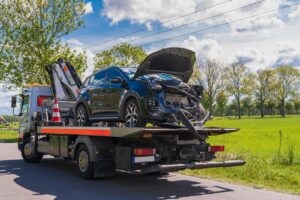
Towing an electric vehicle is not always the same as towing a gasoline-powered car. Some EVs require particular wheel positions, lifting methods, or transport equipment to avoid damaging their electric drive systems.
NHTSA recommends consulting the vehicle owner’s manual for manufacturer-specific towing instructions.
Why Flatbed Transport Is Often Used
Flatbed towing can help avoid unwanted wheel rotation and additional drivetrain damage in many EV models. However, the correct recovery method depends on the vehicle and its condition.
A seriously damaged EV may also require special handling because of possible high-voltage hazards or battery instability.
Tell the Towing Company About Battery Concerns
Before recovery, explain that the vehicle is electric and describe any suspected battery damage, smoke, unusual sounds, or warning messages.
Professional recovery personnel can then consult the manufacturer’s emergency response guide and determine whether additional assistance is required.
Safe Storage After a Serious Collision
A vehicle with suspected high-voltage battery damage should not simply be parked inside a residential garage while awaiting inspection.
NHTSA advises keeping damaged vehicles with lithium-ion batteries away from buildings, other vehicles, and combustible materials. Its general guidance identifies a 50-foot separation precaution for damaged vehicles.
Storage decisions should be made with emergency responders, qualified recovery personnel, or the manufacturer because the safest arrangement depends on the circumstances.
Should You Charge an EV After a Crash?
Do not connect a damaged EV to charging equipment until a qualified professional confirms that charging is safe.
Charging introduces additional electrical activity into the vehicle’s systems. If the battery pack, wiring, or charging components were damaged during the collision, attempting to charge the vehicle could create unnecessary risks.
What About Minor Collisions?
A minor cosmetic incident does not automatically mean the battery has been damaged. Nevertheless, if the impact affected the underbody, charging port, high-voltage components, or surrounding structures, seek guidance before charging.
Drivers should also follow any warnings displayed by the vehicle and consult the manufacturer’s recommendations.
Who Should Inspect a Damaged EV?
 High-voltage systems should be assessed by technicians with appropriate electric vehicle training and equipment. Ordinary visual inspections may not reveal every issue inside a battery pack.
Depending on the collision, a qualified technician may need to inspect the battery enclosure, electrical connections, charging components, cooling system, and related electronic controls.
Owners should avoid attempting to open a high-voltage battery pack or repair damaged cables themselves.
Document the Vehicle’s Condition
When it is safe to do so, keep photographs of the vehicle’s exterior damage, dashboard warnings, and other visible conditions. Save towing records, inspection reports, repair estimates, and communications with the manufacturer or service facility.
If the collision was recorded by a dashcam, preserve the original recording and maintain backup copies.
For more general safety information, read The Role of Technology in Preventing Car Accidents.
How EV Accident Insurance Claims May Differ
Electric vehicle repairs can involve specialized equipment, trained technicians, and expensive components. A collision that affects the battery enclosure or high-voltage systems may require additional inspection before repairs can begin.
Insurance coverage and repair decisions depend on the policy, vehicle condition, applicable requirements, and inspection findings.
Owners should preserve relevant documentation and avoid assuming that a vehicle is safe simply because its exterior damage appears limited.
For an overview of post-crash insurance issues, see Car Accident Basics: How Insurance Works After a Crash.
How EV Owners Can Prepare Before an Accident
Preparation can make an unexpected collision easier to manage. EV owners should become familiar with their vehicle’s emergency instructions and understand how to communicate important information to responders.
Review the Owner’s Manual
Learn where the vehicle’s emergency information is located and which procedures the manufacturer recommends after a collision.
Know the Vehicle’s Make and Model
Emergency responders may need specific vehicle information to locate the appropriate emergency response guide.
Keep Emergency Contacts Accessible
Store the manufacturer’s roadside assistance number, insurance contact information, and other useful details where they can be accessed without relying entirely on the vehicle’s electronic systems.
Follow General Crash Prevention Habits
Safe following distances, attentive driving, appropriate speed, and awareness of surrounding traffic remain important regardless of vehicle powertrain.
For practical driving guidance, review Top Car Accident Prevention Tips Every Driver Should Learn.
Final Thoughts
Electric vehicles include sophisticated systems designed to protect occupants and manage battery operation. Most EV collisions do not automatically result in battery fires, but serious damage can create hazards that drivers should understand.
High-voltage electrical components, possible thermal runaway, delayed fire risks, and specialized towing requirements make professional assessment important after a significant crash.
The safest response is to prioritize personal safety, inform emergency responders that an electric vehicle is involved, avoid touching damaged electrical components, and obtain qualified guidance before towing, charging, repairing, or storing the vehicle.
Understanding EV battery safety after a crash helps drivers make informed decisions without assuming that every collision creates a battery emergency. Awareness, preparation, and professional assistance remain the most reliable approach.