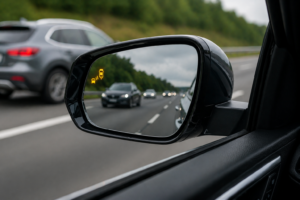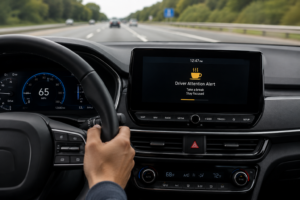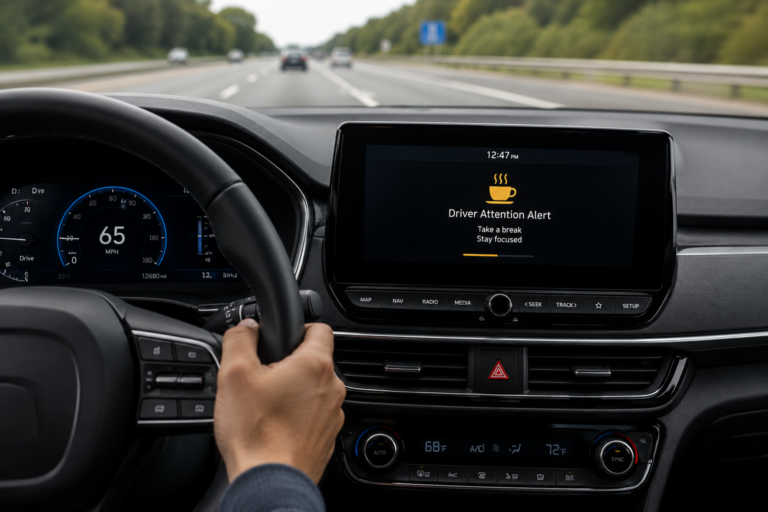
Modern vehicles now include more technology than ever before. Many cars come equipped with lane assist, adaptive cruise control, automatic emergency braking, and blind spot monitoring. Alongside those features, driver monitoring systems are becoming increasingly common. These systems are designed to detect signs of distraction, fatigue, or reduced attention behind the wheel. As more vehicles introduce semi-automated driving features, driver monitoring technology is becoming a bigger part of road safety conversations.
Driver monitoring systems are not designed to replace human judgment. Instead, they are meant to remind drivers to stay engaged while operating the vehicle. Many crashes still happen because drivers become distracted, tired, or overly dependent on technology. Monitoring systems attempt to reduce that risk by tracking driver behavior and issuing alerts when attention appears to drop.
Understanding how these systems work may help drivers use them more effectively. It may also help drivers avoid misunderstandings about what modern vehicle technology can and cannot do.
How Driver Monitoring Systems Work
Driver monitoring systems use cameras, sensors, steering input analysis, and software to evaluate driver behavior. In many vehicles, a small infrared camera positioned near the dashboard or steering column watches the driver’s eyes, head position, and facial movement. Some systems also monitor steering wheel activity, lane position, and braking patterns.
The goal is to determine whether the driver appears alert and engaged. If the system detects signs of distraction, drowsiness, or inattention, it may issue a warning. Depending on the vehicle, warnings may include sounds, dashboard messages, steering wheel vibration, or visual alerts.
Common Behaviors These Systems Monitor
- Eyes looking away from the road for extended periods
- Frequent head movement away from traffic
- Reduced steering wheel input
- Signs of drowsiness or slow reactions
- Erratic lane position or drifting
Some advanced systems may escalate warnings if the driver continues ignoring alerts. In certain vehicles, the system may slow the vehicle or activate emergency support functions if driver response appears absent.
For a broader look at modern vehicle technology, visit The Role of Technology in Preventing Car Accidents.
Why Distracted Driving Is Still a Major Problem
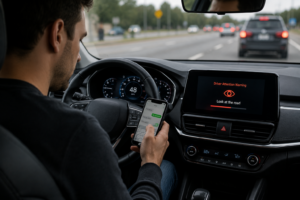 Even with modern safety technology, distracted driving remains one of the leading causes of crashes. Smartphones, infotainment systems, navigation screens, and multitasking habits continue creating risks on the road. Some drivers assume advanced vehicle technology can compensate for reduced attention, but that assumption may increase danger.
Driver monitoring systems exist partly because newer driving technology may create overconfidence. When drivers believe a vehicle can handle more than it actually can, they may become less attentive. That reduction in awareness may lead to slower reactions during emergencies.
Examples of Common Distractions
- Checking messages or notifications
- Adjusting infotainment systems while driving
- Eating or drinking behind the wheel
- Looking away from traffic during navigation use
- Relying too heavily on driver-assist systems
Driver monitoring systems are designed to remind drivers that attention still matters. Even advanced safety systems cannot predict every traffic situation or road hazard.
You can also review Top Car Accident Prevention Tips Every Driver Should Learn for additional crash prevention strategies.
Why These Systems Are Becoming More Common
Automakers are adding more driver monitoring features because road safety agencies and researchers continue studying the relationship between distraction and automation. As vehicles gain more advanced driver-assist tools, manufacturers need ways to confirm that drivers remain engaged.
Some newer systems allow limited hands-free driving under specific conditions. However, those systems still require the driver to supervise the vehicle. Monitoring systems help verify whether the driver is paying attention during those moments.
Reasons Driver Monitoring Is Expanding
- Growth of advanced driver-assist technology
- Concerns about distracted driving
- Increased use of large infotainment screens
- Research into fatigue-related crashes
- Pressure to improve vehicle safety ratings
Many experts believe these systems may become even more common in future vehicles as car technology continues evolving.
What Driver Monitoring Systems Cannot Do
While these systems may support safer driving, they are not perfect. Cameras may struggle in low lighting or when visibility is blocked. Sunglasses, hats, or unusual seating positions may affect detection accuracy. Some systems may also produce warnings when drivers are still paying attention.
More importantly, monitoring systems do not replace safe driving habits. They cannot predict every traffic hazard or make complex human decisions. Drivers still need to scan traffic, maintain safe following distance, and react appropriately to road conditions.
Technology Still Has Limits
- Systems may not detect every distraction
- Alerts may activate too late in some situations
- Environmental conditions may affect sensors
- Drivers may become annoyed and ignore warnings
The safest approach is to treat monitoring systems as support tools rather than primary protection.
How Drivers Should Respond to Monitoring Alerts
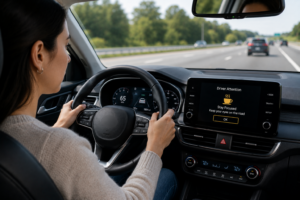 When a driver monitoring alert appears, the safest response is to immediately refocus attention on the road. Drivers should avoid dismissing alerts automatically or assuming the system is overreacting. In many cases, alerts appear because the system detects extended distraction or reduced engagement.
Practical Habits for Staying Focused
- Keep both eyes on traffic whenever possible
- Limit phone use while driving
- Take breaks during long drives
- Adjust navigation and controls before moving
- Keep both hands ready on the steering wheel
Understanding how your specific vehicle’s alerts work may also help reduce confusion while driving. Different manufacturers use different warning sounds, dashboard symbols, and sensitivity settings.
Why Human Attention Still Matters Most
No safety feature replaces human awareness. Technology may support drivers, but safe driving still depends on judgment, patience, scanning habits, and quick decision-making. Driver monitoring systems simply attempt to reduce the chance that a driver becomes completely disengaged.
Drivers who stay mentally focused are often better prepared to respond to unexpected traffic conditions, sudden braking, road debris, pedestrians, or aggressive drivers. Technology may help during brief lapses in attention, but it cannot fully replace responsible driving behavior.
What To Remember About Driver Monitoring Systems
Driver monitoring systems are becoming an important part of modern vehicle safety technology. These systems may help reduce distraction-related risks by warning drivers when attention appears to drop. They may also support safer use of advanced driver-assist features.
At the same time, drivers should understand that these systems have limitations. Cameras and sensors may not always interpret behavior perfectly, and no feature can eliminate all crash risks. The safest approach is to use modern safety technology while continuing to practice strong driving habits.
If a crash still happens, understanding basic post-accident steps may help drivers respond more effectively. You can review Car Accident Basics: How Insurance Works After a Crash for additional information.
For further reading, visit NHTSA distracted driving resources, IIHS distracted driving research, and SAE International automotive safety resources.